
How to Store Coffee Beans for Maximum Freshness
Table of Contents
- Why Storing Coffee Beans Correctly Matters
- What You'll Need to Store Coffee Beans
- Step 1: Start With Freshly Roasted Beans
- Step 2: Choose the Best Coffee Storage Containers
- Step 3: Understand How Long Do Coffee Beans Stay Fresh
- Step 4: Decide if You Can Freeze Coffee Beans
- Step 5: Set Up Your Daily Storage Routine
- Common Mistakes to Avoid When Storing Coffee Beans
- Frequently Asked Questions
Last Updated: October 2, 2026
Why Storing Coffee Beans Correctly Matters
Coffee starts dying the moment it leaves the roaster. Oxygen, moisture, heat, and light attack the oils that give roasted beans their flavor, and damage begins within hours. Learning how to store coffee beans for maximum freshness is the single biggest upgrade you can make to your morning cup.
At Old Guy Outdoors, we roast to order for exactly this reason: fresh coffee is a short window you have to protect. This guide covers picking beans and building a daily routine that keeps them tasting sharp.
Stale beans lose their aroma, turn flat, and taste like cardboard no matter how good your gear is. The steps below take about ten minutes to set up and pay off every morning.
What You'll Need to Store Coffee Beans
You do not need much gear to store coffee beans well. Five basic items cover almost every situation, at home or on a trip.
- One-way valve bags (usually what your beans arrive in)
- An opaque, airtight container with a tight seal
- A cool, dark cabinet away from the stove
- A kitchen scale for measuring doses
- Freezer-safe bags or jars if you plan to freeze
Essential Supplies for Freshness
The one-way valve bag is the most underrated item on that list. It lets carbon dioxide escape after roasting while keeping oxygen out, so keep beans in it until you are ready to move them.
Step 1: Start With Freshly Roasted Beans
Freshness begins before storage. Buy beans with a visible roast date, not a "best by" date, and use them within a few weeks. Coffee roasted to order arrives at peak flavor, a head start no container can match.
A common mistake is buying in bulk to save money. A large bag of grocery-store beans may already be months old before you open it. Smaller, more frequent orders of freshly roasted coffee beat a big stash every time.
Specialty Coffee Association guidance on coffee freshness notes that roasted coffee is at its best in the first days and weeks after roasting, then declines steadily. Plan your buying around that window.
Step 2: Choose the Best Coffee Storage Containers
The best coffee storage containers are opaque, airtight, and sized to hold only what you will drink in a week or two. Clear glass jars look great, but light breaks down the oils in roasted coffee, if you can see the beans, light can reach them.
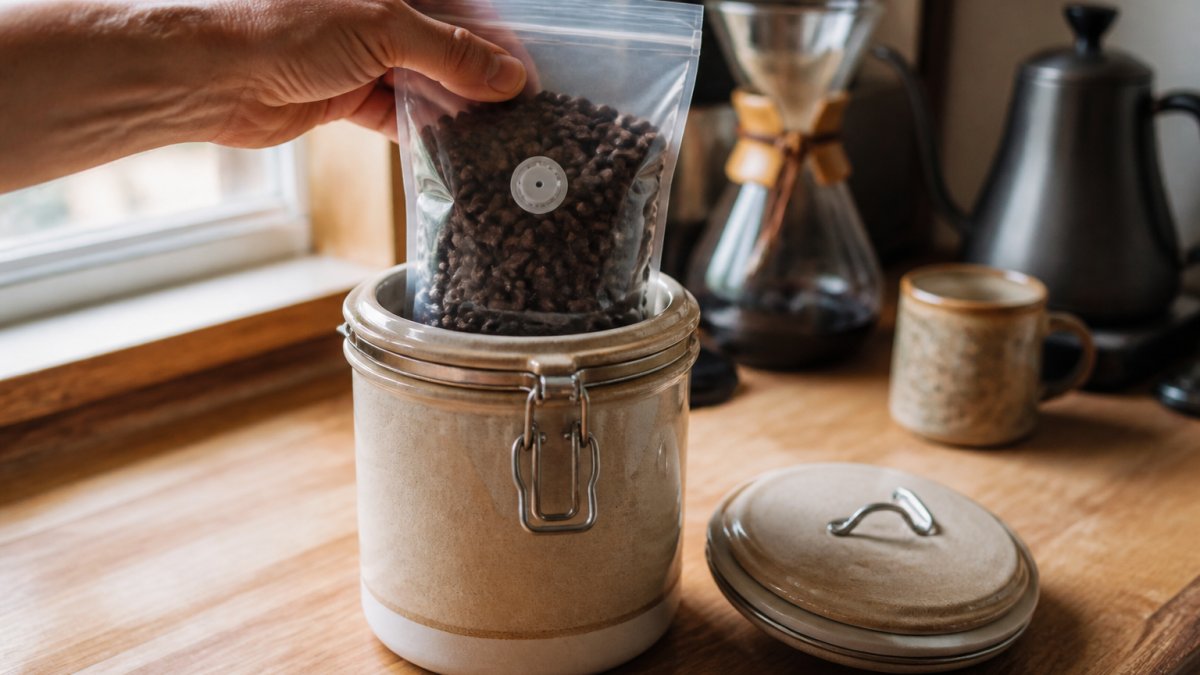
Look for these traits:
- Opaque body (ceramic, stainless steel, or tinted glass)
- Airtight seal with a gasket or clamp lid
- One-way valve if you want to store beans right after roasting
- Right-sized so there is little empty air inside
Opaque vs. Clear Containers
Opaque containers win for daily storage. They block the light that speeds oxidation and protect the volatile compounds that carry aroma. Clear containers are fine for short-term display, but should live in a dark cabinet, not an open counter near a window.
Container Material Science: What Actually Protects Beans
Most guides stop at "opaque and airtight," but the material matters just as much, because each handles UV light, oxygen, and moisture differently. Here is how the common options compare.
Why Roast Level Changes the Storage Math
Most storage advice treats every bag the same, but light and dark roasts do not age identically. Dark roasts are roasted longer, develop more porous, fractured cell structures, and their oils migrate to the surface, making them more vulnerable to oxygen and moisture and quicker to taste stale. Light roasts are denser and hold their structure better, so they stay bright longer, but they absorb ambient moisture more readily.
Step 3: Understand How Long Do Coffee Beans Stay Fresh
So how long do coffee beans stay fresh? Whole beans hold peak flavor for about two to four weeks after the roast date in an airtight, opaque container at room temperature. Pre-ground coffee fades within days, because more surface area is exposed to oxygen.
The Role of Degassing and Carbon Dioxide
Degassing is the release of carbon dioxide trapped inside beans during roasting, why valve bags exist. Fresh beans push out CO2 for several days, and that gas protects them by pushing oxygen away from the surface.
Step 4: Decide if You Can Freeze Coffee Beans
You can freeze coffee beans, and for longer storage it is one of the better options. The freezer slows oxidation and keeps beans close to peak flavor for weeks or months. The catch is moisture: freeze in an airtight, opaque container, and never thaw and refreeze the same batch.
The Freeze Debate: What the Skeptics Get Right
The argument against freezing comes down to two real risks: condensation and odor transfer. Every time you open a container out of the freezer, warm air hits cold beans and moisture condenses on the surface, do that repeatedly and you are steaming your beans a little each time. Coffee is also porous and picks up smells from whatever else is in the freezer.
How to Freeze and Thaw Without Damage
- Divide beans into single-week portions.
- Seal each portion in an airtight, opaque bag or jar.
- Squeeze out excess air before sealing.
- Label each portion with the roast date.
- Freeze immediately, away from strong-smelling foods.
- Thaw one portion at room temperature before grinding.
Freezer burn and moisture are the two enemies here. A tight seal keeps both out. For travel, pre-portioned bags also work well, so you can grab one for a camping trip without opening your main stash.
Portioning, Thawing, and Grinding: The Details That Matter
For travel, pre-portioned freezer bags double as camp storage. Pack one portion per day and keep them sealed until you brew, avoiding a large container that gets opened all week.
Step 5: Set Up Your Daily Storage Routine
A simple routine beats fancy gear. Keep only a week's worth of beans in your daily container, and store the rest sealed and cool. Every time you open a bag, you let in air, so open it less often.
- Store beans in a cool, dry, dark cabinet
- Keep them away from the stove, oven, and dishwasher
- Avoid the fridge for daily storage (temperature swings and odors)
- Grind only what you need, right before brewing
- Reseal the bag fully after each use
Common Mistakes to Avoid When Storing Coffee Beans
| Mistake | Why It Hurts | The Fix |
|---|---|---|
| Clear jar on the counter | Light exposure breaks down oils | Move to an opaque, airtight container |
| Fridge storage | Moisture and odors seep in | Keep beans cool and dry at room temp |
| Buying giant bulk bags | Beans go stale before you finish | Order smaller, more often |
| Grinding a week ahead | Ground coffee stales fast | Grind right before brewing |
| Refreezing thawed beans | Repeated moisture swings ruin flavor | Freeze in single-use portions |
If you want a head start, Old Guy Outdoors roasts to order and delivers straight to your door, so your beans arrive near their peak instead of months past it. Our Best Sellers Sample Pack: 6Bean, Cowboy, Breakfast, Peru, Mexico, Bali lets you try several roasts in small 2oz packs, which is a smart way to test storage habits without committing to a full bag. For longer trips, our Instant Coffee comes in a resealable pouch of 30 servings, so you still get good coffee far from the kitchen.


Frequently Asked Questions
What are the four enemies of coffee freshness?
The four main enemies of coffee freshness are air, moisture, heat, and light. Oxygen causes oxidation, which dulls the flavor and aroma of roasted coffee. Moisture leads to clumping and stale flavors. Heat speeds up the breakdown of volatile compounds, and light degrades the beans' natural oils. Storing beans in an opaque, airtight container in a cool, dry place protects against all four.
Can you freeze coffee beans to keep them fresh longer?
Yes, you can freeze coffee beans, and it works well when done correctly. Freeze whole beans in an airtight, opaque container or vacuum-sealed bag. Remove only what you need, grind them immediately, and return the rest to the freezer. Avoid thawing and refreezing, which introduces moisture. Frozen whole beans can stay fresh for up to two months without losing their flavor profile.
How long do coffee beans stay fresh after roasting?
Whole bean coffee hits peak freshness about 3 to 7 days after the roast date. After that, quality starts to decline. Most beans taste best within 2 to 4 weeks if stored in an airtight, opaque container away from heat and light. Pre-ground coffee stales much faster, often within a week. For the best cup, buy roasted-to-order beans and use them within a month.
Is it okay to store coffee beans in a Ziploc bag?
A Ziploc bag is not ideal for long-term storage. It lets in air and light, which speed up oxidation and stale flavors. If you must use one, squeeze out as much air as possible and keep it in a dark, cool cabinet. For better results, transfer beans to an airtight, opaque container or a one-way valve bag designed for coffee storage.
Getting fresh coffee is only half the battle. Keeping it that way takes the right container, a cool dark spot, and a habit of grinding only what you brew. Old Guy Outdoors makes the first half easy with beans roasted to order, careful sourcing, and fast, reliable delivery that skips the inventory guesswork. Get started with Old Guy Outdoors and enjoy maximum flavor and freshness in every cup, whether you are at the kitchen counter or deep in the woods.