
Best Light Roast Coffee for Pour Over Brewing 2026
Table of Contents
- Why Light Roast Coffee Shines in a Pour Over
- Best Coffee Beans for Pour Over: Our Top Picks
- The Best Brew Method for Light Roast Coffee
- Light Roast Pour Over Grind Size: Getting It Right
- Water Temperature for Pour Over Coffee
- How to Choose by Flavor, Origin, and Freshness
- Troubleshooting Sour or Bitter Light Roast Pour Overs
- Frequently Asked Questions
Last Updated: October 19, 2026
Why Light Roast Coffee Shines in a Pour Over
Light roast coffee is a good choice for pour over brewing because the roast level preserves the bean's origin character, acidity, and delicate aromatics that a slow manual pour extracts cleanly. At Old Guy Outdoors, we roast to order for exactly this reason: a light or medium-light roast loses its best qualities within weeks of the roast date, and pour over amplifies both the good and the stale.
The pour over method gives you control over every variable: water temperature, grind size, and pour speed. Light roast coffee needs that control. These beans are denser and less porous than dark roasts, so water flows through them more slowly and extracts differently.
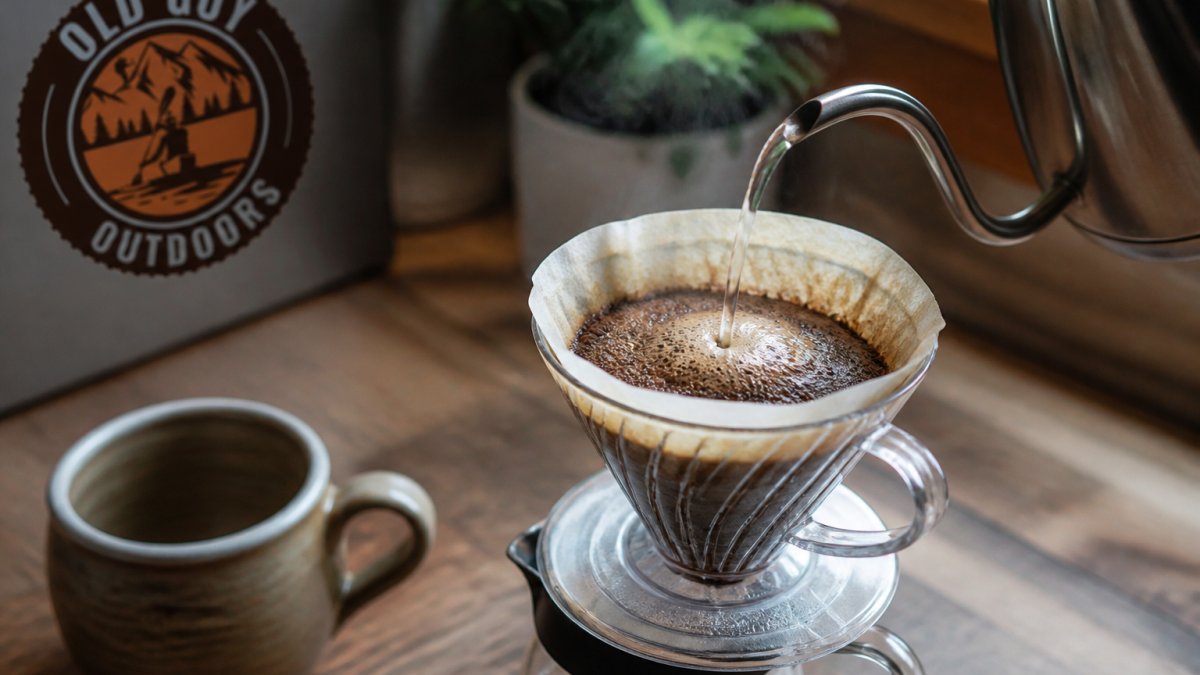
What most guides miss is that a dark roast in a pour over tastes flat and ashy, not bold. The roast has already done the work the brewer should be doing. Light roast coffee lets the brewer decide.
Best Coffee Beans for Pour Over: Our Top Picks
For pour over, light to medium-light single origins with a recent roast date are often recommended, and our three picks below cover the flavor spectrum from bright and floral to smooth and easy. All are roasted to order and priced at $24.99.
| Coffee | Roast | Tasting Notes | Best For |
|---|---|---|---|
| Tanzania | Medium-light | Pear, floral, jasmine, strawberry | Bright, tea-like cups |
| Kenya | Light | Orange, lemon, floral, effervescent | Citrus lovers |
| Breakfast Blend | Light | Walnuts, mild apple, raisin, toffee | Easy everyday brewing |
Tanzania: Floral and Bright
Our Tanzania is a medium-light single origin from small cooperative farmers in the Mbeya region, grown at 1,200 to 1,900 metres and fully washed. Expect pear, jasmine, and strawberry in the cup. This is the pick for anyone who wants a clean, tea-like pour over with real sweetness. It rewards a slightly coarser grind and a gentle pour.

Kenya: Effervescent and Citrusy
The Kenya single origin from Othaya in Nyeri County brings bright acidity, orange, lemon, and a floral, effervescent finish. It is a vibrant coffee we offer. Too fine a grind can turn that lemon into a sour bite.
Breakfast Blend: Smooth and Approachable
Our Breakfast Blend is a lightly roasted blend of South American coffees with walnuts, mild apple, slight raisin, and toffee notes. It is the easiest entry point into light roast pour over. If you are switching from drip coffee, start here.
The Best Brew Method for Light Roast Coffee
Pour over is a good brew method for light roast coffee because it gives you direct control over extraction, and a V60-style cone or Chemex both work well. The method matters less than the recipe you repeat, but the recipe has to match the dripper, because a cone and a Chemex do not drain at the same rate.
What most guides skip is a complete, repeatable recipe with dose, ratio, temperature, pour schedule, and target time. Here are two starting points, both built around a 1:16 ratio and a medium-fine grind, with the adjustments that matter for light roasts.
V60-style cone recipe (1-2 cups)
- Rinse the paper filter with hot water and discard the rinse.
- Add 22 g of medium-fine ground coffee (table-salt consistency).
- Bloom with 60 g of water at 94-96°C, then wait 40 seconds.
- Pour in slow spirals to 200 g by 1:15, then to 360 g total by 2:00.
- Give the cone a gentle swirl and let it drain fully, aiming for a 3:00-3:30 finish.
That is a 1:16 brew ratio. Keep it constant and change one variable at a time.
Chemex recipe (2-3 cups)
The Chemex's thicker filter slows flow, so start coarser than you would for a cone, sea-salt consistency rather than table salt, and use a slightly larger dose.
- Rinse the Chemex filter thoroughly; the thick paper needs it.
- Add 30 g of coarsely ground coffee.
- Bloom with 90 g of water at 94-96°C for 45 seconds.
- Pour to 300 g by 1:30, then to 480 g total by 2:30.
- Let it drain fully; a 4:00-4:30 finish is normal for Chemex.
Adjustments that matter for light roasts
Light roast beans are denser and less porous, so they resist water and extract slowly. Two adjustments do most of the work:
- Temperature: stay at the high end (94-96°C). If the cup tastes sour and thin, raise the temperature before you change the grind.
- Pour speed: slow, steady spirals keep the bed even. A fast dump channels through the center and leaves the edges under-extracted.
If the brew drains in under two minutes on a cone, grind finer. If it stalls past four minutes, go coarser. On a Chemex, add about 30 seconds to both targets before you adjust.
Light Roast Pour Over Grind Size: Getting It Right
The right light roast pour over grind size is medium-fine, close to table-salt consistency. Light roast beans are dense, so they resist water; a grind that is too coarse leaves you with a thin, sour cup.
If the brew drains in under two minutes, grind finer. If it stalls past four minutes, go coarser. Sea-salt consistency suits a Chemex better than a cone, because the thicker filter slows flow already.
Water Temperature for Pour Over Coffee
The best water temperature for pour over coffee is 92 to 96°C, with light roasts at the higher end of that range. Light roast coffee needs more heat to extract fully because it has not been roasted long enough to become porous.
Water just off the boil, rested for about 30 seconds, lands in that window without a thermometer. If your cup tastes sour and thin, raise the temperature before you change the grind. If it tastes bitter and drying, drop it a few degrees.
How to Choose by Flavor, Origin, and Freshness
Choose by flavor first, origin second, and freshness always. Flavor notes on the bag are your best guide: if you like citrus, buy Kenya; if you like floral and sweet, buy Tanzania; if you want something smooth and nutty, buy the Breakfast Blend.

But flavor notes alone are not a decision framework. Most practitioners find it helps to sort light roasts into three practical cup profiles and pick the one you actually want to drink in the morning.
Pick by the cup you want
- Floral and tea-like: East African washed coffees, Kenya, Tanzania, Ethiopia. Expect jasmine, bergamot, and a clean, tea-like body. Best if you drink your coffee black and want clarity.
- Sweet and citrusy: Kenyan and some Central American lots. Expect orange, lemon, and a juicy finish. Best if you like brightness but still want sweetness.
- Round and approachable: South American blends and single origins. Expect walnut, apple, toffee, and a softer acidity. Best if you are switching from drip coffee or take milk.
Origin tells you what to expect. East African coffees tend to be bright and tea-like; South American coffees tend to be rounder and sweeter, which is why our Breakfast Blend leans on them. Processing matters too: washed lots are cleaner and more transparent, while natural lots are fruitier and heavier.
Freshness and resting by coffee
Freshness decides everything. Check the roast date, not the best-before date. A light roast is at its best roughly 5 to 14 days after roasting, and it fades after that. That is why we roast to order: the bag reaches you close to its peak, and you can pause or restart deliveries when your schedule changes.
Resting is not one-size-fits-all. A common pattern is to rest brighter, denser light roasts, Kenyan and Tanzanian washed lots, for 7 to 10 days so the CO2 settles and the acidity softens. Softer, sweeter blends like our Breakfast Blend are often ready at 4 to 7 days. If a fresh bag tastes sharp or gassy, give it a few more days before you change your recipe.
Store beans in an airtight container away from light and heat, and buy in amounts you will finish within a few weeks. Freezing in a sealed bag works for longer storage, but grind from frozen only if you adjust the dose slightly.
Troubleshooting Sour or Bitter Light Roast Pour Overs
Sour and bitter are two ends of the same problem: extraction. Sour means under-extracted; bitter means over-extracted. Light roast coffee makes under-extraction more likely because the beans give up their flavor slowly.
| Problem | Likely Cause | Fix |
|---|---|---|
| Sour, thin cup | Grind too coarse | Grind finer |
| Sour, thin cup | Water too cool | Raise to 94-96°C |
| Bitter, drying finish | Grind too fine | Grind coarser |
| Bitter, drying finish | Water too hot | Drop a few degrees |
| Weak but not sour | Too little coffee | Increase dose to 22g |
| Stalled brew | Filter clogged with fines | Coarser grind, slower pour |
Change one variable per brew. Two changes at once and you learn nothing.
Frequently Asked Questions
What is the best brew method for light roast coffee?
Pour over is a good brew method for light roast coffee because it gives you full control over water temperature, pour speed, and extraction time. A V60 or Chemex lets the bright acidity and delicate floral notes come through without the bitterness that can come from immersion methods. For a 2000-word article, you'd want to mention that light roasts need water just off the boil, around 93-96°C, and a medium-fine grind to avoid under-extraction.
What grind size should I use for light roast pour over?
Use a medium-fine grind for light roast pour over, similar to table salt. Light roast beans are denser and less porous than dark roasts, so they need a finer grind to extract properly. If your coffee tastes sour or weak, go finer. If it tastes bitter or dry, go coarser. A quality burr grinder makes this adjustment much easier and more consistent.
How hot should water be for light roast pour over coffee?
Water temperature for pour over coffee should be between 93°C and 96°C for light roasts. This range extracts the sweetness and complexity without scalding the delicate flavors. If you don't have a temperature-controlled kettle, boil water and let it sit for 30-45 seconds before pouring. Too cool and the coffee tastes sour; too hot and you risk bitterness.
Why does my light roast pour over taste sour?
Sourness in light roast pour over usually means under-extraction. The most common causes are a grind that's too coarse, water that's not hot enough, or a brew time that's too short. Try grinding finer, increasing water temperature to 96°C, and extending the brew time by 30 seconds. Also check your brew ratio: aim for 1:16 coffee to water.
Which coffee origins are best for light roast pour over?
Ethiopia, Kenya, Tanzania, and Colombia are excellent origins for light roast pour over. Ethiopian coffees often show floral and tea-like notes, Kenyan beans bring bright citrus and berry flavors, and Tanzanian coffees offer pear and jasmine. Colombian beans add sweetness and balance. Look for high-altitude coffees from these regions for the most vibrant cups.
Light roast coffee rewards attention, and pour over is the method that pays it back. If you are tired of guessing whether the bag on the shelf is fresh, Old Guy Outdoors roasts to order, sources single origins like our Tanzania and Kenya, and delivers straight to your door with no inventory to manage. Order a bag, dial in your grind, and taste what a fresh light roast can do. Get started with Old Guy Outdoors and brew a better cup tomorrow morning.