
Coffee Delivery Service: Avoid Stale Store Beans
Last Updated: October 24, 2026
Quick Summary
Choose a coffee delivery service that roasts to order and prints a roast date on every bag, so beans ship within days of roasting instead of sitting on a shelf. Ask how soon after roasting the bag ships and confirm you can pause or skip shipments. Old Guy Outdoors roasts to order and ships fast at $24.99 per bag.
- Store-bought bags often carry only a best-by date, not the roast date that tells you how old the coffee is.
- A roaster shipping within one to three business days of roasting typically gets a bag to you about three to seven days after the roast date.
- A 12-ounce bag brews roughly 24 to 30 cups, or about $0.83 to $1.04 per cup at $24.99 per bag.
- Match subscription frequency to your brewing volume so every bag is finished before the coffee fades.
- Store whole beans in an opaque, airtight container in a cool, dark cabinet, never the refrigerator.
Table of Contents
- Why Store-Bought Beans Taste Flat
- How Fresh Roasted Coffee Delivery Beats the Shelf
- Reading the Coffee Beans Roast Date Before You Subscribe
- Comparing Roast-to-Door Timelines and Total Cost
- Matching Coffee Subscription Frequency to How You Brew
- How to Store Whole Bean Coffee After Delivery
- Picking Your First Bag from Old Guy Outdoors
- Conclusion
- Frequently Asked Questions
Why Store-Bought Beans Taste Flat
Store-bought beans taste flat because the coffee in that bag was likely roasted months ago and has been slowly losing its volatile oils ever since. Coffee is a fresh food, not a pantry staple, and the retail shelf works against it at every step.
Here is what happens to a bag on a store shelf. It sits in a warehouse, then a distribution center, then a stockroom, then a display rack under fluorescent lights. By the time you brew it, the roast date, if it is printed at all, is often a season old.
A common mistake is judging freshness by the aroma in the aisle. Once coffee is ground and bagged, the gases that carry aroma escape through the packaging long before you open it. If you want to check your current beans, our guide on 5 signs of stale coffee beans walks through the taste and smell tests you can run at home.
How Fresh Roasted Coffee Delivery Beats the Shelf
Fresh roasted coffee delivery shortens the gap between the roaster and your cup, which is the entire game. Coffee peaks in flavor within days of roasting and declines steadily after that. A roast-to-order model skips the warehouse and the stockroom entirely.
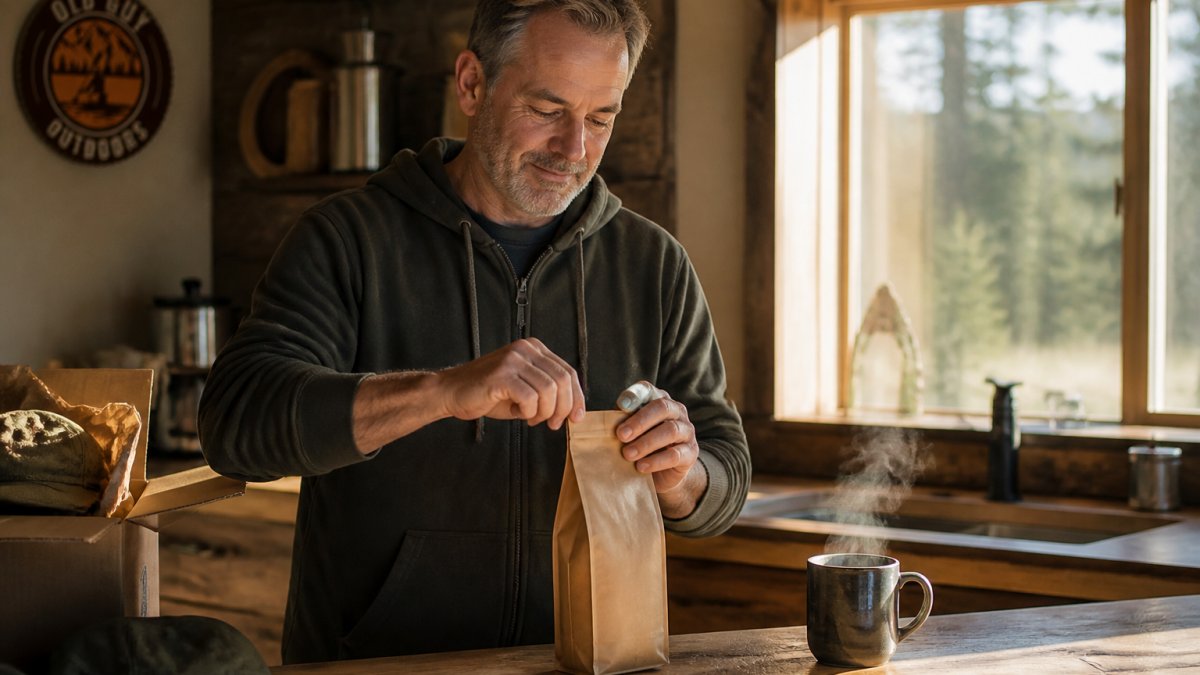
The difference comes down to oxygen exposure. Once beans are roasted, oxygen begins breaking down the aromatic compounds that give coffee its character. Whole bean coffee holds up longer than ground because the surface area is smaller. But no format stops the clock.
Many outdoor enthusiasts we talk with describe the same experience: a bag from the grocery store tastes dull, then a freshly roasted bag tastes like a different drink. That is not imagination. It is chemistry you can taste.
Reading the Coffee Beans Roast Date Before You Subscribe
The coffee beans roast date is the single most useful piece of information on any bag, and it should be printed clearly and recently. A roast date tells you exactly how old the coffee is. A best-by date does not. The practical skill is verifying freshness before you subscribe, not after the first bag arrives.
Use these checks before you commit to any service:
- Roast date on every bag. Look for a printed roast date, not just a best-by date. If the service shows only a best-by date, ask whether a roast date is printed on the bag itself.
- Roast-to-ship cadence. Ask how soon after roasting the bag ships. A roaster that ships within one to three business days of roasting is giving you a shorter clock than one that batches orders weekly.
- Published schedule. Does the roaster publish its roast-and-ship schedule? A public schedule is a sign the roaster expects you to care about freshness.
- Bag size. Smaller bags turn over faster and are easier to finish before the coffee fades. A 12-ounce bag suits most daily drinkers better than a two-pound bag they cannot finish fresh.
- Packaging. A one-way degassing valve lets roasted coffee release carbon dioxide without letting oxygen in. Ask whether the bag has one.
- Freshness guarantee. Some services guarantee a roast-to-ship window or will replace a bag that arrives stale. Ask what the policy is before you subscribe.
- Cancellation, pause, and skip terms. These practical terms affect value and convenience. Confirm you can pause or skip shipments without penalty so you are not stockpiling aging beans.
A common pattern is that services emphasizing freshness make the roast date visible on the product page or in the box, while services that do not emphasize it bury the date or omit it. Treat that difference as a signal. If a service cannot answer these questions plainly, that is your answer.
If you are still deciding which roast style suits your taste, our guide to choosing a coffee roast profile breaks down how medium and darker roasts differ in the cup.
Comparing Roast-to-Door Timelines and Total Cost
Roast-to-door time and total cost are the two numbers that separate a fresh service from a shelf-bound one, but most comparisons stop at the sticker price. A useful comparison measures the days between the roast date printed on the bag and the day it lands at your door, then divides the all-in cost by the number of cups you actually drink before the coffee fades.
Start with the timeline. Ask each service three questions: When is the coffee roasted relative to when it ships? How long does shipping take to your ZIP code? And is the roast date printed on the bag or only a best-by date?
Here is how the main options compare on the numbers that matter:
| Option | Typical roast-to-door time | What you pay | Freshness control |
|---|---|---|---|
| Grocery store bag | Weeks to months | Low per bag, no subscription | None; roast date often hidden |
| Local roaster walk-in | Days to weeks | Mid per bag | Good if the roast date is recent |
| Roast-to-order delivery | About 3-7 days after roasting | Subscription or one-time; shipping may be included or added | High; roast date printed |
| Old Guy Outdoors | Roasted to order, shipped fast | $24.99 per bag | High; roasted to order |
Now do the cost math. A 12-ounce bag of whole bean coffee brews roughly 24 to 30 cups at a standard strength, depending on your dose. At $24.99 per bag, that works out to roughly $0.83 to $1.04 per cup before shipping.
Shipping changes the math too. Some subscriptions include shipping in the plan price; others add a flat or weight-based fee per box.
Waste is the hidden line item. If a subscription ships more coffee than you can drink before it fades, the unused portion is a cost you paid for and did not enjoy.
For a broader look at what is available, our roundup of top-rated fresh coffee delivery for wilderness explorers compares services on the criteria that actually matter to outdoor drinkers.
Matching Coffee Subscription Frequency to How You Brew
Subscription frequency should match your brewing volume, not a default setting. A camper brewing one pot a day needs a different cadence than a home espresso drinker pulling shots every morning.
Work backward from your habits. Count how many cups you brew in a typical week, then estimate how long a bag lasts. A standard bag lasts most daily drinkers a couple of weeks. If you brew more, order more often or order two bags at a time.
Flexibility matters here. A subscription that locks you into rigid deliveries will leave you with a stockpile of aging beans. The best setup lets you adjust frequency, skip a shipment, or pause entirely when your schedule changes. That keeps every bag fresh and keeps your money working.
If you are planning how much to order around camping and fishing trips, our guide to the best coffee for outdoor adventure trips helps you match bag size and brewing method to your trips.
How to Store Whole Bean Coffee After Delivery
How to store whole bean coffee well comes down to four things: air, light, heat, and moisture. Control those and your beans stay fresh longer after the bag arrives.
Follow these storage rules:
- Keep beans in an airtight container, not the open bag.
- Store the container in a cool, dark cabinet, away from the stove.
- Buy whole bean and grind just before brewing.
- Keep beans out of the refrigerator, which introduces moisture and odors.
- Freeze only for long-term storage, in a sealed bag, and let beans come to room temperature before grinding.
A common mistake is transferring beans to a clear glass jar on the counter. It looks good and ruins the coffee. Light and warmth speed up the decline. Use an opaque, airtight container instead.
Picking Your First Bag from Old Guy Outdoors
Picking your first bag is easier when you start with a versatile roast and adjust from there. At Old Guy Outdoors, we roast to order so every bag ships fresh, and our single-origin lineup gives you a clear starting point.
Our Colombia is a medium roast with dried orange, berry, and chocolate notes, a balanced cup that suits most brewing methods. The Costa Rica brings sweet apple, raisin, and honey. Guatemala offers dark chocolate, bright fruit, and butterscotch. Honduras runs medium-dark with caramel, spice, and brown sugar. Mexico rounds it out with chocolate, cinnamon, and green apple.
Each bag is $24.99. Start with one origin, brew it a few ways, and let your taste guide the next order.
Conclusion
The real problem with store-bought coffee is not the brand on the bag. It is the time between roast and cup, and most retail coffee loses that race. Choose a service that prints a roast date, ships soon after roasting, and lets you pause when life gets busy.
Old Guy Outdoors roasts to order for maximum flavor and aroma, sources beans carefully, and delivers fast so your coffee arrives fresh. Ordering is simple, and there is no inventory to manage. Get started with Old Guy Outdoors and taste what fresh coffee is supposed to be.
Frequently Asked Questions
Is coffee delivered fresher than coffee from a grocery store?
Usually yes. Grocery-store bags often sit in warehouses and on shelves for weeks or months before you buy them, and many carry only a best-by date rather than a roast date. A coffee delivery service that roasts to order ships within days of roasting, so the beans reach you closer to peak flavor. Ask for the roast date on the bag and check how quickly orders ship before you commit.
How can I tell if coffee beans are fresh?
Look for a printed roast date, not just a best-by date. Fresh whole bean coffee usually smells sweet and lively when you open the bag, and the beans look dry rather than shiny with oil. If the bag has no roast date at all, treat that as a warning sign. Once you have the beans, store them in an airtight container away from light and heat to keep them fresh longer.
How soon after roasting should I use coffee beans?
Most roasters suggest letting beans rest a few days after roasting, then brewing within two to four weeks for the best flavor. Whole bean coffee holds up longer than ground coffee because less surface area is exposed to air. That is why a coffee subscription frequency that matches your drinking pace matters: order enough to finish each bag while it is still fresh rather than stockpiling.
Is a coffee subscription worth it for fresh beans?
It can be, especially if you drink coffee daily and want a steady supply of freshly roasted beans without reordering each time. The value depends on shipping cost, price per bag, and whether you can pause or skip deliveries when you travel. Compare the total cost per cup against what you spend at the store, and check the cancellation policy before you sign up.
