
Why Roasted to Order Coffee Is Better: A 2026 Guide
Table of Contents
- Why Roasted to Order Coffee Beats Store-Bought Every Time
- What 'Roasted to Order' Actually Means (And Why It Matters)
- The Coffee Roast Date: Your Most Important Freshness Clue
- How Long After Roasting to Brew Coffee for Peak Flavor
- How to Store Coffee Beans for Maximum Freshness
- Roasted to Order vs. Pre-Roasted: A Side-by-Side Comparison
- What to Look for in a Roasted to Order Coffee Seller
- Conclusion: Freshness You Can Taste
- Frequently Asked Questions
Last Updated: October 14, 2026
Why Roasted to Order Coffee Beats Store-Bought Every Time
Roasted to order coffee is roasted in small batches after you place your order, rather than weeks or months before it reaches a shelf. The difference shows up in the cup: brighter aroma, clearer flavor, and far less of the flat, papery taste that comes with age.
Coffee does not improve with time on a shelf. It starts declining the moment it leaves the roaster.
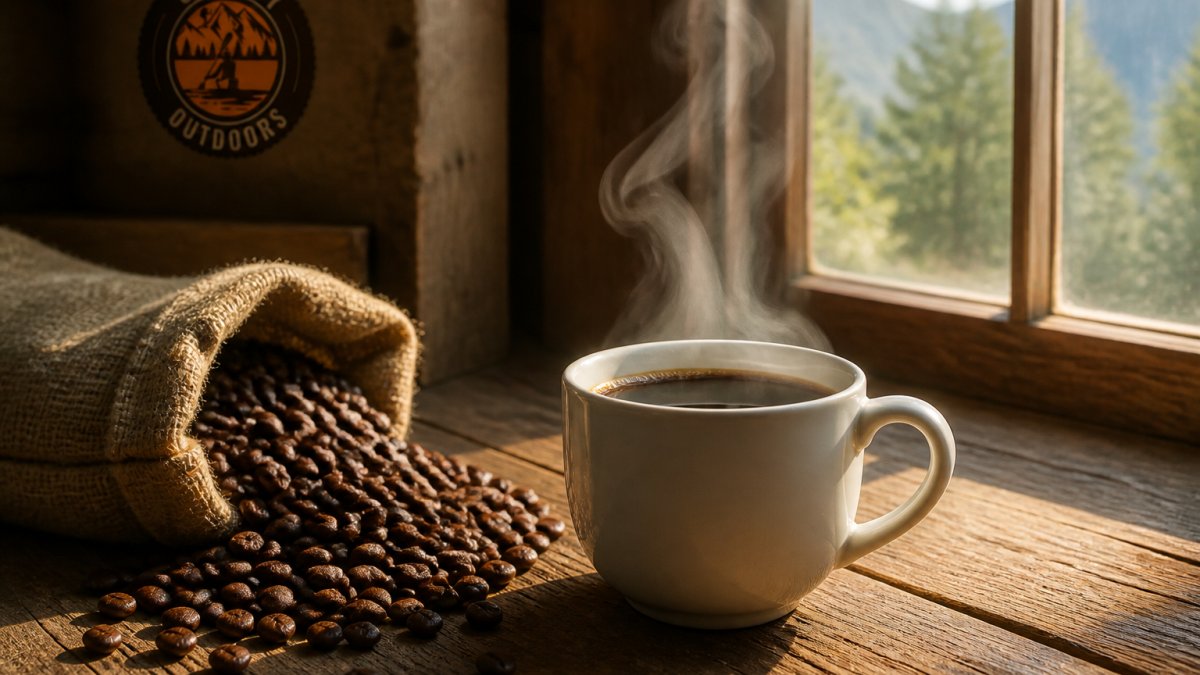
Retail bags often carry a "best by" date instead of a roast date, which tells you nothing about when the beans were actually roasted. According to guidance from the Specialty Coffee Association on freshness and storage, roasted coffee is a perishable product, and its quality peaks in a narrow window after roasting before steadily declining. That single fact explains why roasted to order coffee tastes different from a bag that has been sitting in a warehouse.
Below, we break down what happens inside the bean, how to time your brewing, and how to tell whether a seller's "roasted to order" claim is real.
What 'Roasted to Order' Actually Means (And Why It Matters)
Roasted to order means the roaster waits for your order before running the roast batch. Nothing is pre-roasted and warehoused. The beans go from roaster to bag to shipping in a matter of days, not months.
Operationally, there is no finished-goods inventory sitting in a warehouse losing flavor. Green coffee is stored (which keeps far longer), and roasting happens on demand. That model costs more in labor and scheduling, which is part of why roasted to order coffee usually costs more than a supermarket bag.
The payoff is a shorter gap between the roasting process and your grinder. And that gap is the whole ballgame.
The Coffee Roast Date: Your Most Important Freshness Clue
The roast date is the most useful number on any coffee bag. It tells you when the beans finished roasting, so you can calculate how much freshness is left.
Most supermarket bags print a "best by" or "expiration" date set months out, which says nothing about roast timing.
When you shop, look for a printed roast date, not a best-by date. Then do the math against today's date.
But a roast date alone does not prove a seller roasts to order. A roaster can print a recent date on a bag roasted in a large batch weeks earlier and held in a warehouse.
To tell the two apart, ask four questions before you buy:
- When does roasting happen relative to my order? A true roasted-to-order seller roasts after you order, not before. If the answer is vague, assume the beans were pre-roasted.
- How many days pass between roasting and shipping? A common pattern is to roast on Monday and ship Tuesday or Wednesday. If the gap stretches past a week, the roast date is already losing its meaning by the time the bag reaches you.
- What is the batch size? Small batches turn over faster and are easier to roast to order. Very large batches usually mean the roaster is stocking inventory, not roasting on demand.
- Is the roast date printed on the bag or only shown online? A printed date on the bag is harder to fake and easier to verify when the coffee arrives.
One more check: compare the roast date to the shipping date on the tracking label. If the package left the roastery more than a few days after the roast date, the coffee spent that time in a bag, not in your grinder, a signal about how the seller manages freshness.
A roast date is a starting point, not a guarantee. What matters is how much of that clock has run down by the time the beans reach your kitchen.
How Long After Roasting to Brew Coffee for Peak Flavor
The ideal window to brew is roughly 4 to 14 days after the roast date for most brew methods, with espresso often peaking a little later. Brew too soon and the beans are still degassing; brew too late and oxidation has already muted the flavor.
Right after roasting, beans release carbon dioxide in a process called degassing (Time-Resolved Gravimetric Method To Assess Degassing of Roasted Coffee). That gas interferes with water contact during extraction, which is why a bean roasted yesterday can taste thin or oddly sharp. Give it a few days and degassing settles, flavor compounds stabilize, and extraction becomes consistent.
A practical freshness window by brew method:
| Brew Method | Best Window After Roast | Why |
|---|---|---|
| Pour-over / drip | 4-14 days | Balanced extraction once degassing slows |
| French press | 5-21 days | Longer contact time tolerates older beans |
| Espresso | 7-21 days | Needs stable gas levels for consistent pressure |
| Cold brew | 7-28 days | Long steep forgives more age |
Store ground coffee for the shortest window of all. Once beans are ground, oxygen exposure accelerates and flavor loss speeds up dramatically. Grind right before brewing whenever you can.
How to Store Coffee Beans for Maximum Freshness
Storing coffee beans for maximum freshness means blocking four enemies: oxygen, moisture, heat, and light. Control those and your roasted to order coffee holds its character far longer.
The rules are simple:
- Keep beans whole until the moment you brew
- Store in an airtight, opaque container
- Keep the container in a cool, dark cupboard, not the fridge
- Avoid the freezer unless you are storing a large amount long-term, and never thaw and refreeze repeatedly
The refrigerator is a common mistake. Every time you open the door, beans are hit with moisture and temperature swings, and coffee absorbs odors from everything around it. A sealed bag in a dark cupboard at room temperature beats the fridge almost every time.
Roasted to Order vs. Pre-Roasted: A Side-by-Side Comparison
Roasted to order coffee wins on freshness, aroma, and flavor clarity. Pre-roasted coffee wins on price, convenience, and availability. Which is "better" depends on what you value most.
Here is the honest comparison:
| Factor | Roasted to Order | Pre-Roasted (Retail) |
|---|---|---|
| Typical age at purchase | Days after roast | Weeks to months |
| Aroma and flavor | Peak, fully developed | Often muted or flat |
| Roast date on bag | Usually printed | Often a best-by date only |
| Cost per bag | Higher | Lower |
| Convenience | Requires planning and shipping time | Grab and go |
| Consistency | Small-batch, varies by harvest | Blended for uniformity |
The trade-off is real: roasted to order coffee costs more and asks you to plan ahead. If you drink coffee daily and care how it tastes, that trade is easy to justify.
But the comparison does not end at the table. Two factors change the picture in ways most guides skip: degassing and shipping time.
Freshness windows differ by brew method. Treating all coffee as having one ideal age is a mistake. A practical guide:
| Brew Method | Best Window After Roast | Why |
|---|---|---|
| Pour-over / drip | 4-14 days | Balanced extraction once degassing slows |
| French press | 5-21 days | Longer contact time tolerates older beans |
| Espresso | 7-21 days | Needs stable gas levels for consistent pressure |
| Cold brew | 7-28 days | Long steep forgives more age |
For espresso, many baristas rest beans longer than for pour-over because espresso is sensitive to carbon dioxide. A bean perfect for drip at day five may still be too gassy for espresso.
Our own approach reflects the first camp. Old Guy Outdoors roasts single-origin beans to order, so what lands at your door is days old, not months. The Colombia, for example, is a medium roast with dried orange, berry, and chocolate notes from smallholder farms near Medellín, and it ships at $24.99 a bag.

What to Look for in a Roasted to Order Coffee Seller
A real roasted to order seller tells you three things without being asked: the roast date, the shipping timeline, and where the beans came from. If any is vague, treat the claim with suspicion.
Use this checklist before you buy:
- Does the bag carry a printed roast date, not just a best-by date?
- Does the seller state how many days pass between roasting and shipping?
- Is the origin listed, including region and farm or cooperative?
- Is the roast level described (light, medium, dark)?
- Are tasting notes specific rather than generic?
- Is there a clear return or replacement policy if a shipment arrives damaged?
That last point matters more than people expect. Coffee is perishable and shipped through the mail, and a seller who stands behind their product will say so plainly.
For a quick way to compare origins, here is how our single-origin lineup breaks down:
| Coffee | Roast Level | Tasting Notes | Price |
|---|---|---|---|
| Colombia | Medium | Dried orange, berry, chocolate | $24.99 |
| Costa Rica | Medium | Sweet apple, raisin, honey | $24.99 |
| Guatemala | Medium | Dark chocolate, bright fruit, butterscotch | $24.99 |
| Honduras | Medium-dark | Caramel, spice, brown sugar | $24.99 |
| Tanzania | Medium-light | Pear, floral, jasmine, strawberry | $24.99 |
Coming from a grocery-store bag, expect the first cup to taste noticeably brighter. The fruit and floral notes lost in older beans are still there in coffee roasted days ago.


Conclusion: Freshness You Can Taste
The gap between roasted to order coffee and a warehouse bag is not marketing. It is chemistry: aromatic compounds fade, oxygen does its slow work, and the cup flattens week by week. Roasting to order shortens the distance between the roaster and your kitchen.
That is the idea behind Old Guy Outdoors. We roast single-origin beans to order for maximum flavor and aroma, ship fast so the roast date still means something, and keep ordering simple. Whether you are brewing at a campsite before a day on the water or easing into a quiet morning at home, the coffee should taste like it was roasted for you.
Get started with Old Guy Outdoors and taste what a fresh roast date actually delivers in the cup.
Frequently Asked Questions
Is roasted-to-order coffee better than pre-packaged coffee?
Yes, for flavor and aroma. Pre-packaged coffee may sit on a shelf for months before you buy it, losing aromatic compounds through oxidation. Roasted to order coffee is roasted specifically for your order, so it arrives within days of roasting. This preserves the flavor compounds that give coffee its caramel, chocolate, or fruit notes. The difference is most noticeable in the first few weeks after the roast date.
How long after roasting is coffee at its best?
Most coffee reaches peak flavor 48 to 72 hours after roasting, once degassing has released enough carbon dioxide for proper extraction. For espresso, a resting period of 5 to 10 days often works best. For pour-over or drip, 3 to 7 days after the roast date is a good window. Coffee stays enjoyable for about 2 to 4 weeks after roasting if stored properly.
How can you tell if coffee beans are fresh?
Check the coffee roast date on the bag. Fresh beans also have a strong aroma when you open the bag and feel slightly oily or matte depending on the roast level. When you brew them, fresh beans bloom actively, releasing bubbles and foam. If the beans smell flat or stale, or if the bag has no roast date, they are likely older than ideal.
How should you store freshly roasted coffee beans?
Keep beans in an airtight container away from light, heat, and moisture. A dark cupboard works well. Avoid the fridge because condensation can damage the beans. For longer storage, freezing in a sealed bag is an option, but let beans come to room temperature before grinding. Buy only what you will use within 2 to 4 weeks for the best flavor.